The conversion of Reformed, Emergent/ging and Neo-Charismatic reflections on Church, Theology, Spirituality and Culture With the Intention of Deconstructing the Monkey by a 4th generation Kelabit Christian
Sunday, July 19, 2009
Jesus' Return & Hell
Saturday, July 18, 2009
Leadership as Embodying
5 Views on the Historical Jesus
Friday, May 29, 2009
Richard Hays speaks at the Junaluska Peace Conference, February 1, 2008
Sunday, May 17, 2009
S. F. R. J. (Thoughts & Reflections) Chp 1: Joining Mary at the Feet of Jesus
This chapter sets the frame on two Jewish understandings on the use of these sentences ‘sitting at his feet’ as well as ‘anointing’ (in this case Mary anointing Jesus). Using these two examples, the authors are communicating to us the importance of studying Jesus in his Jewish context. It is interesting for them to use Mary to open up the pathway of following this rabbi named Jesus and subsequently framing the depiction of discipleship to Jesus the Messiah in the two sentences I mentioned above.
Take ‘sitting at his feet’ for example:
“If we were first-century visitors, we would have recognized the significance of something else in that story. It was customary for rabbis to sit on low pillows or chairs while they were teaching. Their disciples would sit on the ground or on mats around them. That’s how the phrase “sit at his feet” became and idiom of for learning from a rabbi…So when Mary was described as “sitting at Jesus’ feet”, she was being described as a disciple.” (14)
Without the Jewish understanding of this particular sentence 'sit at his feet' we miss something profound and essential. A simple understanding would just depict Mary as an avid listener or willing to hear Jesus teach. These understandings might be right but coupled with Jewish eyes, the words that were once simplistic and had some sort of mundane imagery turns into a rather enlightened portrayal; discipleship.
...as well as ‘anointing’:
“By anointing him (Jesus) with expensive fragrances, Mary may well have been making a statement about who she believed Jesus was, proclaiming him as Messiah.” (16)
Anointing was clearly framed to Jews on occasions where kings and priest were put into office. It is interesting to observe that the authors link Jesus’ riding the donkey and his anointing in parallel with Solomon’s episode in 1 Kings 1:38-40. It is explained that the fragrance of Jesus being anointed by Mary would have lasted for days and that his fragrance was surely evident wherever he went. Jesus smelled like royalty. (18)
These depictions are fascinating because without cultural background of first-century Judaism, these insights would never have popped up to the imagination. Something that the authors were able to convince us at the beginning of the chapter is that there is a growing need of reading and understanding scripture in the light of its first-century background. Thinking through this chapter arouses my curiosity back again to the gospels and the deconstruction of what we have always thought certain passages meant.
There is a list of the online conversation discussing the book. Click here to see the other blogs that are discussing about the book!
Wednesday, May 6, 2009
Sitting at the Feet of Rabbi Jesus (Thoughts & Reflections) Introduction
Sitting at the Feet of Rabbi Jesus Intro; Can we find a more Jewish Jesus?
Sitting at the Feet of Rabbi Jesus 1; Do You have the 'anointin'?
Today I will start to do a blow by blow reflection as well as some thoughts on each chapter of the book. So if you have the time, join in the conversation. Your comments will be greeted with open arms. If you haven't been following, I have already done a review of the book here on my blog which you can see here.
Thoughts and Reflection
One of the things that has bothered me whenever I read the gospels before was the puzzling effect that it had on my mind. This has been a lifelong (well maybe not lifelong, i just tend to exaggerate sometimes) struggle for me from time to time. I had a hard time reading the Sermon on the Mount because it seemed to run counter with Paul's gospel. At some points Jesus seemed a far more striker Lord then some might want him to be; 'meek and mild'.
At points I simply get frustrated with Jesus' parables and sayings, simply foreign. Foreign might be an understatement but, foreign might be a better description for labeling Jesus' words. Why foreign? Because Jesus lived in a time when our values did not exist. He lived in a cultural background that had different thought patterns than what we might have now. Another factor to the foreignness of Jesus is, his nationality; he was a Jew.
In the introduction page, the authors says that,“The goal of this book is not so much to help you understand Judaism as to help you hear Christ’s life-changing words with greater clarity and force.” (8) With this, one could come to the conclusion that studying Jesus' Jewishness brings together clarity and force to words that would have been lifeless or sounded clueless to our ears. But some people might cringe to this proposal. Take these quotes from Piper in his book "The Future of Justification" on sources bearing in mind Jesus' cultural context,
"...the interpreter may misunderstand the first-century idea." (34)
"...while it may accurately reflect certain first-century documents, nevertheless it may reflect only one among many first-century views." (35)
"...while the New Testament writer may embrace the external idea in general, a scholar might misapply it to the biblical text." (36)
The overall view is that it is simply impossible to reach a consensus on what is true of Jesus' first-century context and therefore the probability of distorting the text is considered high. Though I am aware of the difficulty of this should navigating our way to clearly understand God's words in the context of his chosen people deter us from taking the plunge? Lois and Ann continue on to say that,
“We have also been careful to place Jesus within his first century Jewish context rather than that of later ages. We hope the end result will be of help to pastors, students, and lay people who find their reading of the bible all the more fascinating and life transforming as they come to appreciate and understand the Jewish context that shaped it.” (8)
For me, based on Lois and Ann's findings which they have projected in the book, their take on Jesus' first-century background is refreshing breath of fresh air. Although those who might be curious to find out where they got their sources could look up the page on the books that they researched through. I would not go as far as saying that they have covered all the bases on first century issues because i'm not an expert in this field yet (hopefully someday) but there is a degree of humility resonating all throughout the book.
To conclude this post, Jesus' Jewish context might be a new field of study, but non the less a minefield you might want to look at seriously simply for the fact that clarity abides there. This calls for a restructuring in how we used to view Jesus. For me personally, understanding Jesus in his Jewishness makes things more clearer.
Simple, Concise and a Robust Gospel
A few weeks back I did a post on whether we could tweet the gospel. CT actually posed the question to Rob Bell. A while after that there have been numerous blog posts talking about the possibility of tweeting the gospel. Some criticized Bell for his take on it (well his take on the gospel based on his book "Jesus Wants to Save Christians") which you could read here. And on the same site also, a few days after critiquing Bell, there was a post on "How would you present this gospel on Twitter?" and it was a contest on who could put up the best way to convey the gospel via tweets. Just a note here, i'm not posting this to say that I disapprove of them for making it into a contest, in fact i'm up for any contest that gives me a chance to win books.
Reading the post again a few days after it was posted, there were a lot of responses from people on their take on tweeting the gospel. But I was somewhat disappointed with the answers that were put up. It makes me wonder whether it is even a good idea to even think of tweeting the gospel. Because of the concise nature, a lot of things get lost, and it really makes the Christian message look kind of dour and sour. See for yourselves here.
I'm not an enemy of simplicity and concise presentations but somethings are not worth working out in simplistic forms. Why? Because we might miss some important detail. Details that might have been vital in our presentation. So what should we do, if we wanted to present a simple yet concise as well as robust gospel?
I like McKnight's take on this
"The gospel is the story of the work of the triune God (Father, Son, and Spirit) to completely restore broken image-bearers () in the context of the community of faith (Israel, Kingdom, and Church) through the life, death, and resurrection of Jesus Christ and the gift of the Pentecostal Spirit, to union with God and communion with others for the good of the world." Read the rest of the article here.
To me this would be a better way at conveying simplicity, conciseness and a wider grasp of the gospel as a whole.
Thursday, April 30, 2009
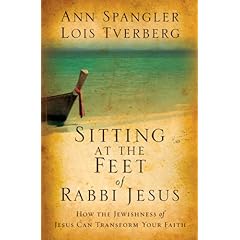
Sitting at the Feet of Rabbi Jesus (a review)
I somewhat vaguely remember the time when I was able to merge the words ‘Jesus’ and ‘Jewish’ together. Jesus was always depicted as a white guy with straight blond hair, blue eyes, neatly trimmed beard and a flowing white robe. But thanks to Philip Yancey’s “The Jesus I Never Knew”, it suddenly made sense that Jesus was indeed a Jew and being a Jew, lived in a Jewish setting and a Jewish way of thinking. That was my introduction into Jesus and his Jewish context. Given the amount of understanding I had then, I had a hard time stranding the thoughts of the book together. Not that Yancey was an awful writer, but I did not have enough introductionary knowledge to jump into the conversation.
But fast forward now, authors like N. T. Wright and Scot McKnight have been authors that had helped me immensely in sojourning the field of the first-century context of Jesus. But only after reading some short introductionary articles on the web by these authors and countless others was I able to understand some of the terms and views that were presented.
To be able to dive into a certain field of study it is important for any student to start with a book detailing introductions on that certain subject. I’m happy to state now that this book, “Sitting at the Feet of Rabbi Jesus” by Ann Spangler and Lois Tverberg is a godsend because it is a helpful book in the veins of an introduction to the Jewish background of Jesus.
The book is divided into 14 chapters and with helpful Appendices pages, notes and indexes. At 272 pages, I would say the book is about the right size for an introductionary book, not too thin and it’s not too thick either (although personally I prefer another 50 or more pages.)
The authors state that they have been “careful to place Jesus within his first-century context rather than of the later ages” and hope that the book would be of help to “pastors, students and laypeople who find their reading of the bible all the more fascinating and life transforming as they come to appreciate and understand the Jewish context that shape it”. I think the authors do exceptionally well in doing what they described without getting the reader entangled with details of dates as well as myriads of views on cultural background. Their approach is concise as well as accessible. For example in chapter one on the word anointing, particularly in the passage where Mary anoints Jesus with expensive perfume, the authors state that there is another side to understanding this than just the description that Mary was only doing it, un-be-knowingly, to prepare for Jesus’ burial (Matt 26:12). Anointing carries the meaning that Jesus was the anointed one, taking the context of how anointing in Jewish eyes and senses captured the moment. Passages in the OT also are brought into attention to build on the meaning. I don’t think readers will find it difficult to strand together as well as explain. They are simply concise and informative.
That is just one of the countless examples though. Moving on, an initial observation again toward the book is its presentation of the values and customs of the Jewish people which do more than just appease the appetite of the mind. The Jews valued community more base on what I read. In a chapter on haverim, which simply means a student having a study partner for male student and haverah for female student, we get the picture that Jews look at the process of studying differently. They preferred to study in community, together with a group and debates were part of their study nature. Such a different study culture compare to my Malaysian context, especially with debate taking primal role in studying.
I find myself appreciating Jewish liturgy and their formal prayer which some are read from scripture or passed down from tradition which was refreshing. I have also gained some understanding about how Jews viewed the law as we often call it not as a set of rules but a book that God gave out of his grace to show them how to live. I think there are some things in the book that might just shake the sock off our thinking and I hope would ultimately revise of deconstruct previous held positions and reconstruct better grounded views of scriptural understanding and faith. Another thing that made the book accessible was that it had these short concise frames on the sides to explain Jewish words and terms if readers were unfamiliar with them. This sure beats the constant flipping to the back of the book which explains the terms. This book has both the side bar meanings which are concise as well as an appendix page for meaning of the words in a more detailed manner.
Overall, I was not disappointed by the book at all. I was at first skeptical when I first became aware of the book, of whether it would be able to attain to a standard that I had for a book on the subject of dating Jesus in his first-century Jewish context. I think that is the danger if we just stick to a selected group of writes in whom we trust regarding their scholarship. But I have to say that the information in this book has been very helpful, and that is to say the least. I would easily recommend the book to anyone having no background on the subject. But I would not just say this book is just for beginners, it’s for anyone curious enough to dive into the study of Jesus’ Jewish context. You will be richly bless by Ann and Lois’ insights. The book might renew also your desire in “sitting at the feet of rabbi Jesus”.
The same Review is also on amazon. See here.
And starting next week, I will be blogging my reflections and thoughts on each chapter of the book.
Saturday, April 25, 2009
Stay tuned: "Sitting at the feet of Rabbi Jesus"
One of the great things about getting involved in the blogging is having such privileges of posting reviews, reflections, thoughts on books, moreover, if you get the chance to get copies for free. So starting next week I will be posting a review and some reflections on this book entitled "Sitting at the Feet of Rabbi Jesus" by Ann Spangler and Lois Tverberg. It's a smashing book to say the least, and the main attraction about the book is it deals on issues of viewing Jesus in his Jewish context. I'll refrain from explaining more at this point though and will keep them for the coming week.
For more information about the book and also the authors go to their website at Our Rabbi Jesus. Or simply go to the Zondervan page.
Saturday, April 18, 2009
The Prodigal Son- Explained by Kenneth E. Bailey
Some important cultural context in which we should consider when we interpret this parable. Good stuff.
Saturday, March 21, 2009
Faith-Sacrifice-Testing-Faith
Stuck in a rut at the moment and it really is draining my energy. Sometimes i wonder how Abraham does it. His walk of faith is remarkable not to mention the strain of years. I'm reading through Eugene Peterson's "The Jesus Way" and the chapter on Abraham is pretty amazing (although i had trouble reading the chapter on Moses. Really messed with my head. Anyone read the book? I could use your insights here.).
Let me quote some profound stuff that I read on Abraham chapter
"Untested faith does not yet qualify for faith." (57)
"The test is the catalyst in which our response to god, the raw material of faith, is formed into a life of faith. Or not. If the test dissolves whatever we were calling faith into romanticized sludge or pietistic ooze, we are blessedly rid of what will dissipate our life in self-deception."(57)
In other words, faith to be faith must be tested to examine the quality. Testings purify or more likely, sheds the unnecessary ounces that we gather to be faith. I really like what is said here. But it is another thing if we are to embody this sort of thinking. I would add another thing though. Maturity in faith is spelled 'Trust'. After all the sacrifices and testing going on and purging faith, or what you though faith was, the refines fire works through and yields a life of trust. Sometimes there is a slight wish that mature faith or trust to yield its fruit in an instant. I would like it that way. Wouldn't all of us?
The road from infant faith to maturity in faith is laden with sacrifices and testings, the things that happen in the in between of life. But yet, after we have arrived to maturity in faith, we stary another journey again. The only difference is we dont really have to struggle between the goads too much.
At the end of the chapeter Peterson brings up this line
Lk 22:42 “Father, if you are willing, take this cup from me; yet not my will, but yours be done.”
My initial response now would be, "Lord increase my faith." But I know he would just say, "It's not about me increasing your faith, it's about you discovering it." I'd like to think that's what he would say.
Thursday, March 19, 2009
The View from the Mastaba
Saturday, March 14, 2009
4 or 5 point pamphlets or the whole biblical narrative
"Earlier the same year I had a conversation with my friend Omar, who is a student in a local college. For his humanities class, Omar was assigned to read the majority of the Bible. He asked to meet me for coffee, and when we sat down he put a bible on the table as well as a pamphlet containing the same five or six ideas Greg had mentioned. He opened the pamphlet, read the ideas, and asked if these concepts were important to the central message of Christianity. I told Omar they were critical; that, basically, this was the gospel of Jesus, the back bone of Christian faith. Omar then opened the bible and asked, "If these ideas are so important, why aren't they in this book?"
"But the scripture references are right here,"I said curiously, showing to Omar that the verses were printed next to each idea.
"I see that," he said. "But in the bible they aren't concise like they are in this pamphlet. They are spread out all over the book."
"But this pamphlet are the summations of the ideas," I clarified.
"Right," Omar continued, "but it seems like, if these if these ideas are that critical, God would have taken the time to make bullet points out of them. Instead he put some of them here and some of them there. And half the time, when Jesus is talking, he is speaking entirely in parables. It is hard to believe that whatever it is He is talking about can be summed up this simply." " (p 152)
Thursday, March 12, 2009
Taking Jewish context into consideration
One of the things that has attracted me to Wright's writings and thought of Jesus and the NT is namely the framework that he uses to frame the understanding. I like the stance of understanding Jesus in his Jewish context. I would say it illumines the NT to the point of understanding it better. Why so?
Let me frame this in one of the struggles I had with the bible and my christian faith. Being a new christian, one of the things that bothered me was Paul's constant use of "first for the Jew, then for the Gentile". Although I was happy being a follower of Jesus, it bothered me that reading the NT there was a lot of Jewish stuff having notable mention (I secretly wished that I was a Jew to be honest because Gentiles seemed second class citizens!). The framework of Jews working for their salvation (self righteousness) and the notion of Jesus coming to fulfill the righteous requirement of the law because we could not fulfill it was something I found incomplete. Even the gospel message that explained Genesis 1-3 where we in the beginning were supposed to have relationship with God and sin came in the was by route of the Fall. God's remedy was to send Jesus to die for our sins and we to believe in this wonderful sacrifice.
In all this framework shaping our christian faith, it seemed that there was no room for the OT, particularly in God's election of a nation, Israel, as God's plan of redemption. The gospel presentation that I was taught cut out this vital element of God's plan by simply throwing Jesus in the picture without any reference to his Jewish upbringing and thought life as a Jew. The OT and NT seemed very different reflections on God and by far miles apart.
My first encounter with taking Jesus' Jewishness seriously was Philip Yancey's "The Jesus I Never Knew". I'm sorry to say that I thought that this understanding was revolutionary, something new even. I think it shows how far we have wandered off in taking Jesus' Jewish context seriously, at least that is how I would state it. My journey in taking Jesus' Jewishness seriously was further aroused reading an article from Christianity Today (February 8, 1999 edition) with a special section entitled "The New Theologians". The article focused on 5 theologians of note; Richard Hays, Kevin Vanhoozer, Miroslav Volf, Ellen T. Charry and N. T. Wright. I like the article so much that I vowed to own and read books by these authors of whom I put as my new heroes. I can say that this was the day that I stared to think that being a scholar was cool or in the eyes of some the day I was converted to dweeb land. I can safely say that I own a substantial amount of their works in my library (I have 3 of Hays', 4 of Vanhoozer's, 1 of Volf's and Charry's and the bulk of Wright's work!). Of all the authors mentioned here it was my reading of Wright that propelled and compelled me further in really taking Jesus' Jewishness seriously.
Reading the bible after reading it 'Wrightly' has made the bible more readable in the sense that the context and framework that Wright proposes for us to gives understanding of God's big picture; His grand story of redemption (Genesis- Abraham and Israel- Jesus and the Church).
Monday, March 9, 2009
Making some sense of forgiving & blessing the Enemy and responsibility
Locked in inner turmoil in understanding the mandate to bless our enemies and do good to them seems to really bother me a lot. One of the things that bothered me was, if I bless this person of who has cause me much pain and inner turmoil will God simply let him go? Will God exhaust his anger and simply overlook to just turn his face upon what this person has done to me? Will this enemy of mine just take in the forgiveness that I give him and simply have no remorse about what he did? Not even lint sized remorse? Will he just take the forgiveness for granted and look at it as judgment upon me and that he deserved me to bow low to his authority without the faintest doubt that he did anything wrong?
These are things that go through my mind. These are the things that I struggle with. This is the reason I find that forgiving the enemy (a so called Christian fellow) whom has wronged me, with me obvious of my innocence. Some further questions come to mind again to propel making sense to Jesus' mandate. Let's point it specifically to a church community.
What is our call? What is the responsibility of the believer of who has been wronged?
(Most of the reflections is from the epistle of James) His responsibility is to endure through the turmoil. Keep on living a life in response to the faith... But most importantly committing oneself to God and that means much more towards leaving judgment to him. The responsibility of the believer who was wronged is to forgive the brother who has wronged him, if so his enemy and still treat him with respect (this comes as a problem if the person holds a position of status and he is actually in the wrong) in the order of blessing and doing good to our enemy.
Some thoughts come to mind…how do we actually pray for our enemies? How do we bless those who persecute us? This is a big question mark to me but I am still struggling through it. This is simply a different code of ethic. At this point I think the common knowledge here is simply; we are mere humans and judgment of determining right and wrong belongs to God. If we trust in a God who is impartial, who helps the poor and those in the position of injustice we can take the forgiveness route because we trust one that will bring no partiality in how judgment is supposed to be executed.
I think the key element here is trusting a God that is just. The struggle is waiting for judgment to happen or to be executed. Trusting God is living in this tension.
I think most of the explanation here leans on the part where the person wronged and he can do nothing about it already.
What is the responsibility of the leadership of the church of knowing the issue at hand?
Given the responsibility of shepherding the church and keeping the unity of the community, the church cannot simply sweep matters arising under the rug and make hasty decisions out of anger and without much digging in the facts. The church leadership cannot also just listen to one side of the story and simply believe without question the situation at hand.
Here is what I believe the church leadership's responsibility lays. They are to be the neutral ground in keeping the peace of the community. Possible horrible mistakes that they can either lean to is making decisions without bringing both opposing parties to hear out their views, to judge by status, to simply pursue 'reconciliation' of both opposing parties without even settling out the issue because they want to arrive to making peace and keeping the community in tack with a simple exhortation that says both have to accept God's mandate of forgiving one another.
To me all the above really does not solve the issue because the body where justice should be 'executed' because the church leadership simply does not want to struggle with the issue. Matters are not solved, justice is not served and a false sense of reconciliation although goes on a peaceful stride for some time, will eventually break and go back to the same lane.
I believe the church leadership cannot simply seek instant measures of reconciliation; they have to struggle through the things at hand and do all possible to seek a worthy decision. Taking a route that calls for instant magic is simply a adulteration of their responsibility.
Where is God in all the decisions; justice?
Sometimes I wonder why God doesn't act swiftly at what he sees. Sometimes I wonder why he doesn't simply pry open the eyes of church leaders who seem blind to the things happening around them. The big question is why does God relent to act? I found the quote below challenging as well as helpful:
This has been a long post over a period of a short hiatus from blogging. These things are still fresh in my head as well as my heart. Do let me know what you think.
The heavens are mute and in shock!
I think Jesus did more then what the picture above is depicting. It says here "Jn 1:14 The Word became flesh and made his dwelling among us." Jesus identified and also rubbed dirt with us.I had this thought in my head a few days back. A man walks up to someone on the streets and talks to him about the love of God. The basic track content of explaining how someone is reconciled back to God and avoids heaven (the four spiritual laws for example).
After some time going through the tract the man soon ask the guy on the street, lets say this guy is some poor homeless guy, asks him whether he wants to accept Jesus into his life because if he does he will experience God's blessing on his life. So the homeless guy does what he is told to do from this man and prays the sinners prayer.
After that the man lights up after leading someone to Christ, thinking to himself the ecstatic cheers and applause happening in heaven over a soul that is saved. Having done his job, he leaves the 'gospel' tract with the homeless guy and a bible. The man tells him just to follow the steps found on the back of the tract where it says "Now that you are a Christian...", and then leaves smiling while the homeless guy is still in his same condition; homeless, hungry and poor. Well, at least he is saved right?
Do you think the angels and God will approve of this?
I doubt it though.
Sunday, February 15, 2009
My Own Prison,Death by Paper Cuts and Philemon
Creed's debut album "My Own Prison" made headlines somewhere in 1997 as a promising band and statistics aside they were one of the greatest bands around. There were alot of spiritual overtones generated from their lyrics which I could really relate with. Even at this time now, after the break up of the band I continue to listen to them (though I can't help thanking their break up for the birth of my fave band Alter Bridge). One song that's resonating now is "My Own Prison".
The lyrics of the song (if I still remember correctly) was written about their friend who had committed suicide.To me it talks about the realization that there is a point of escape but only on realizing the accusations are ours alone. The depiction of the person in the song is one that doesn't want to get up and take responsibility of their life and move on. A person that mirrors the past defining the future and never pulling him/herself through the ruckus. In a nutshell, to me, the song talks about taking responsibility.
I would like to convey what I'm going through literally but that would be revealing too much (I have taken much heat of writing too literally on my opinions and feelings in the past). I can only say that today marks the day when "my own prison" that was killing me by "paper cuts" is being challenged to the new possibility of "the reconciling love of God in Christ " (Philemon 1 and this post).
Friday, February 13, 2009
How important is the Virgin Birth? (2)
Far too much attention is given towards Jesus' birth than "it's role in the New Testament warrants". A song noted by Wright simply says "Man will live forevermore because of Christmas Day", a song popularized by Bony M (if I am not mistaken), further enhances Wright's argument. According to the NT however it is the explanation of "Calvary, Easter and Pentecost" which looms as the highlight of New Testament theology. It is not possible to construct a meaningful NT theology minus the death and resurrection.
In the NT, the virgin birth account can only be found in Matthew and Luke but nowhere in Mark and John. The rest of the NT writers did not bother to mention it to support the understanding that Jesus is divine or is the Messiah who is to come. As Wright notes, "One can be justified by faith with no knowledge of it."
According to Wright "it has become a test case in various controversies" noting arguments such as accepting miracles, biblical truth, views of sexuality and incarnation being cases made for the authoritative case for the virgin birth. Wright being ever so right, nails these test cases of their freedom to fly by stating, "None of these arguments bears much relation to what either Matthew or Luke actually say."
It seems like these test cases are just vain reflections of authoritative fallacy. Which brings us to the question of 'what does Matthew and Luke actually say?'. The next post will deal on this issue.
Wednesday, February 11, 2009
How important is the Virgin Birth?
"...can a true Christian deny the virgin birth? Dr.Al Mohler has said: "The answer to that question must be a decisive No....Christians must face the fact that a denial of the virgin birth is a denial of Jesus as the Christ. The Savior who died for our sins was none other than the baby who was conceived of the Holy Spirit, and born of a virgin. The virgin birth does not stand alone as a biblical doctrine [;] it is an irreducible part of the biblical revelation about the person and work of Jesus Christ. With it the Gospel stands or falls." (97)
Slightly taking this doctrine on different end is Rob Bell which Driscoll takes a quote form his book "Velvet Elvis" :
"...Rob Bell speculates that if "Jesus had a real, earthly, biological father named Larry, and archaeologists find Larry's tomb and do DNA samples and prove beyond a shadow of a doubt that that virgin birth was really just a bit of mythologizing the gospel writers threw in to appeal to the followers of the Mithra and Dionysian religious cults that were hugely popular at the time," we would essentially not loose any significant part of our faith because it is more about how we live. To be fair, Bell does not deny that virgin conception of Jesus, but rather he does deny that it is of any notable theological importance." (97)
Based on the quotes above two ideas are being projected:
1) The Virgin Birth is important; with it the Gospel stands or falls.
2) The Virgin birth is not so much an essential in the sense that the Gospel stands and falls.
What do you think about the quotes? And with that how important is the virgin conception to our faith? I would like to hear your thoughts on this.
I will post N. T. Wright's take on this tomorrow because I'm too tired to think at the moment. I need sleep.
Wednesday, February 4, 2009
I Smoke
Well it didn't look like an outburst of obvious rebellion but it was gradual. A process really.
I remember the first time I lit a cigarette in my mouth was when a friend asked me to try it out. Well, I thought, no harm in me trying it. So I did. I lit it and puffed away. I was good at it or so it seemed until my friend told me, "You're not doing it right. You're puffing the smoke." Well I always thought that this was the normal way of doing it. At least I can say that my observation of the whole thing was false. "So how do you really do it," I said with a dab of innocent curiosity. "You inhale the smoke, then you puff it away," he said. So I tried the 'Smoking 101' advise and made a fool of myself. His method sucked (or so I thought). It made me cough. He laughed, and that was my last time trying the stuff. I vowed never to touch another cigarette again, or so I thought. Like new year resolutions, we never can attain our idealistic hopes and make them reality.
I can't vividly remember specifically when but I know the year, it was 1999, that spawned this new habit. I didn't think as that time that it was some sort of habit. For me, smoking was a new identity I had embraced. I reasoned that smoking will be a part of my life. It will be the new me. Good philosophy don't you think?
Like any relationship endeavor, I had to find the perfect cigarette, one that complimented my personality. There were constant dates that I had with a certain brand but I finally made up my mind and decided a monogamous relationship with Dunhill, which stands for Style, Quality, Excellence. And like any relationship, there were up and down moments. I needed Dunhill every morning (in my case waking up in the morning stood for waking up in the afternoon). But at time Dunhill choked me, spending my money, making me have this nasty cough and smelly breath. I love Dunhill but there were issues.
But my break up with cigarettes happened in 2000, specifically on February 14 (no kidding). I was sitting on the hood of my dad's car, puffing away on the last remaining 5 stick that was left. I only managed to smoke two and finally decided that I was through with Dunhill and smoking and cigarettes. There we no emotional ties when it happened, I did not shed any tears. After the break up I said yes to Jesus.
OK, OK. I know you might be thinking that I am proposing that Jesus liberates and smoking is of the devil. But that's not my point, well in a way it is but read on.
Sometimes our explanation of being free or being liberated by Jesus denotes a sharp distinction as saying smoking is bad, or some folks tell us it is of the devil. But i fell this explanation of saying, before I was a smoker and my life sucked and now I am a believer I have peace. I am not a fan of this testimony explanation.
You see it is true that being in Jesus sorts of liberates us, gives us freedom. But it is not an automatic change. Like a relationship with someone or in this case a pattern of lifestyle, it is done overtime. We build on them. So this pattern lives on us, becomes part of us. It becomes sort of like our lifestyle. When change comes there is some sort of uneasiness. Change proposes a new way to live, a new kind of lifestyle.
Following Jesus is this kind of change. Changing the pattern of life we used to live. The promise that we are given is freedom and liberation; hope. But to realize this hope we have to embrace this change, this new pattern of life opposed to the old one.
My parents watch a heavy dose of 'the health channel'. Normally people who lived a pattern of life that embraced a faulty way of eating habits always find it hard to in the process of changing. Their fitness instructors tell them to ditch their former pattern of eating and embrace another pattern. It's as much a physical change as it is a mental change. The fitness/health instructors tell them that following this pattern of eating and exercise will free them of a flabby body and health issues among other things, and prolong their life. In the process this is not always realized. but as the process of embracing change prolongs the notion of the promise and hope explained by the fitness/health instructors becomes reality. It becomes something real after all.
And in life, embracing Jesus is that process of changing your old pattern of life and embracing a new pattern of living. Freedom/liberation will be fully understood in the process of continual living. Yes, Jesus is the one that liberates us from the corrupt life. Only it is a process in which we grow in being convinced by it.
Hopeful Theo
- Tremonti
- OIL TOWN, SWK, Malaysia
- I'm a student of Theology (currently and will always be one). I'm a student of culture and a student of music as well. I guess you could say life is a never ending journey of learning. Because of that we never stop being students. Just a little something about this blog: Deconstructing The Monkey is all about being a safe space for emerging conversations